
Why what you can see isn’t always what determines the outcome of a property claim.
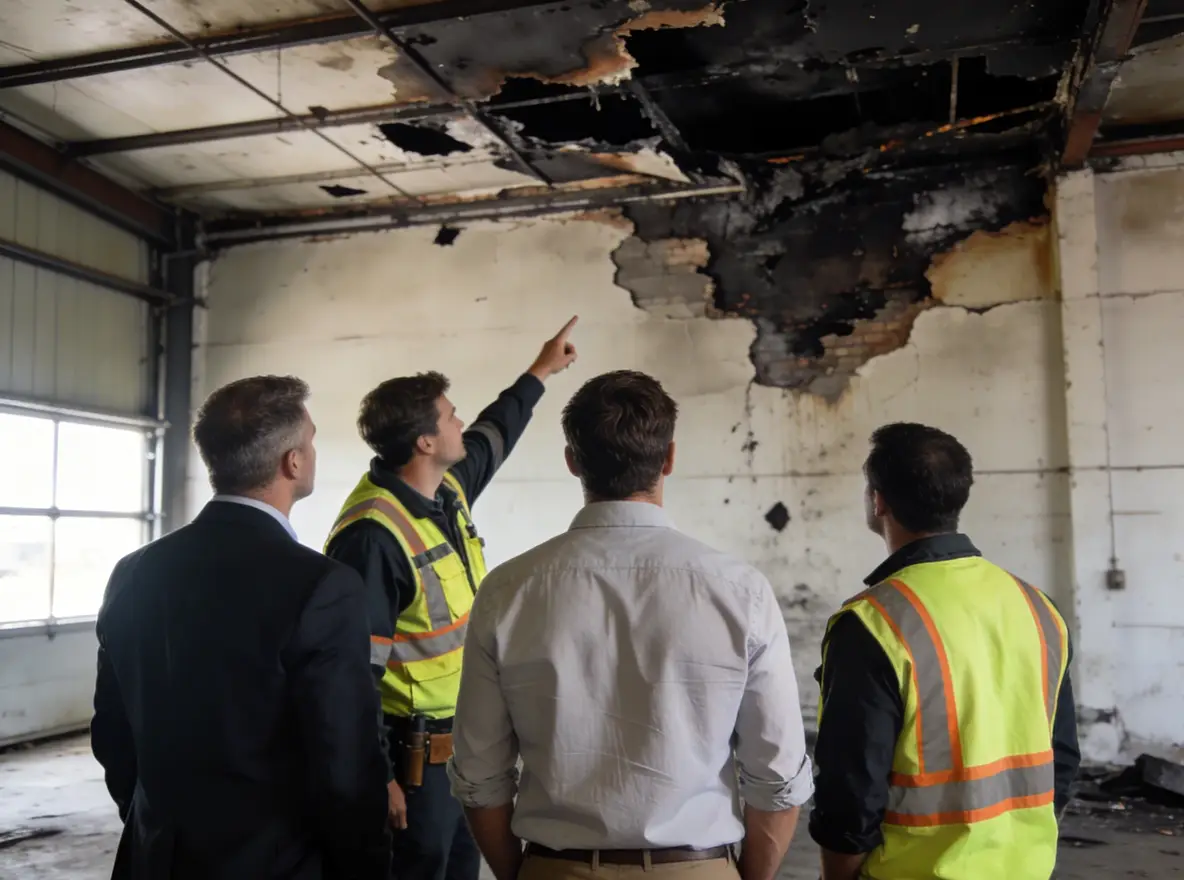
In property claims and disputes, the most obvious damage draws the most attention. Burned materials, cracked surfaces, water stains, collapsed components — they feel like the center of the issue because they’re visible and immediate.
But visible damage is only a starting point. What actually drives claim outcomes — in negotiation, mediation, or litigation — is defensible damage: damage that can be supported technically, documented clearly, and explained in a way that holds up to scrutiny from adjusters, attorneys, and experts.
That distinction might sound subtle. In practice, it changes everything.
Visible Damage Triggers the Claim. Defensible Damage Resolves It.
Visible damage is what anyone can observe without specialized analysis — the charred section of a structure, warped flooring, a stained ceiling, damaged roofing. It’s important because it triggers the claim, shapes first impressions, and drives early conversations.
But visible damage alone doesn’t tell you the true scope of loss, the actual cause, whether additional areas are affected, what repairs are technically necessary, or how the claim will ultimately be valued. Without deeper evaluation, visible damage can lead to incomplete conclusions — or worse, misplaced focus that creates problems later.
What Makes Damage “Defensible”
Defensible damage goes beyond what’s immediately apparent. It’s damage that can be supported through inspection, measurement, and technical reasoning — and that answers the questions that actually matter as a claim progresses:
What caused this condition? How far does the impact actually extend? Can materials be restored, or do they require replacement? Were building systems affected indirectly? What evidence supports the repair scope?
When a claim reaches the negotiation table or a courtroom, these are the questions that determine the outcome. If damage can’t be explained clearly and supported technically, it becomes difficult to defend — regardless of how obvious it looked on day one.
Where Visibility and Defensibility Diverge
This is where experienced consultants earn their value.
Fire losses. The burned area may appear contained, but smoke migration through wall cavities and HVAC systems can create broader damage requiring remediation — damage that’s invisible on a walkthrough but fully defensible with the right testing and documentation.
Water losses. A small ceiling stain may seem minor, but moisture mapping and material testing can reveal hidden structural impact that supports a significantly larger repair scope than what’s visible to the naked eye.
Structural claims. Visible cracking draws immediate attention, but the defensible issue often involves underlying movement, installation defects, or load conditions that aren’t apparent without technical analysis.
In each case, the damage that matters most isn’t the damage that’s easiest to see.
Why This Distinction Matters Early
Confusing visible damage with defensible damage creates compounding problems. Hidden damage gets missed. Repair scopes come in incomplete. Documentation falls short. Investigations focus on the wrong issues. Positions have to be revised later — increasing cost, delaying resolution, and undermining credibility at exactly the wrong moment.
Early technical evaluation bridges the gap. It ensures the claim is built on verifiable findings rather than first impressions — before positions harden and options narrow.
Why the Source of the Assessment Matters Just as Much
There’s another dimension to defensibility that doesn’t get discussed enough: who is making the assessment, and what backs it up.
A damage evaluation is only as credible as the experience behind it. Estimates generated from software or prepared by consultants without real construction and restoration experience may look professional on paper — but they often fall apart under cross-examination, in mediation, or when an opposing expert challenges the methodology.
The strongest defensible positions come from professionals who don’t just evaluate damage — they understand what it actually takes to repair it. When an assessment is grounded in hands-on restoration experience, every line item reflects real-world cost, labor, and methodology. That’s a fundamentally different kind of credibility than a desk-based opinion.
For attorneys building a case, this matters. The consultant behind the numbers will likely be deposed or called to testify. If their experience doesn’t extend beyond an office and an estimating platform, that gap becomes a vulnerability.
How This Shapes What We Do at All Claims Consulting
This is the lens we bring to every engagement — and it’s grounded in something most consulting firms can’t offer. Our consultants didn’t come from the desk side of this industry. They grew up on the production side of restoration — managing crews, running projects, and solving problems in the field across fire, water, mold, and structural losses. That experience is what makes our assessments defensible in ways that paper-only opinions are not.
As a licensed General Contractor with a full restoration arm, we stand behind every number we put on paper. When we write an estimate, we price it as if we were hired to do the repairs ourselves — because we can. That’s not a hypothetical. It’s how we’ve operated since 1983, across more than 10,000 assignments for over 100 insurance carriers throughout Florida.
For the attorneys we work with, that means a consultant who fits into your workflow without creating additional drag — and whose technical positions hold up from initial evaluation through deposition and trial.
Let’s Talk About Your Matter
If you’re dealing with a complex property loss, a scope dispute, or a claim where you need a defensible technical position early — we’re available to discuss it confidentially.

Tony Allogia
President, All Claims Consulting
Expert. Neutral. Credible.